AMBULANCIA.AI at Strategy Lab on AI and technological innovation (in Slovak)
At Strategy Lab we discussed technology in Slovakia with the public sector, investors and AI companies.
Read the article (in Slovak)AMBULANCIA.AI is the first local-only AI assistant for outpatient clinics in Slovakia. We are developing a speech-to-text model adapted to Slovak medical language. We want to bring more voice input and voice control into Slovak healthcare – so that doctors type less and focus more on the patient.
AMBULANCIA.AI is a research and development project focused on the use of artificial intelligence in healthcare. Its first solution is a local AI assistant that processes the spoken conversation during an examination and prepares a draft clinical note (dekurz) for the doctor to review.
At Strategy Lab we discussed technology in Slovakia with the public sector, investors and AI companies.
Read the article (in Slovak)Together with the Faculty of Natural Sciences of UCM, we want to improve the training and fine-tuning of the language models AMBULANCIA.AI is built on.
Read the article (in Slovak)The new Examples page presents eleven model examinations – from the doctor’s conversation with the patient to the draft clinical note.
Read the article (in Slovak)We are looking for doctors who will use AMBULANCIA.AI in their practice and help us fine-tune it for everyday work.
Read the article (in Slovak)A better transcript is not one miracle fix. It takes measurement, patience and feedback from practicing doctors.
Read the article (in Slovak)Over the summer we moved forward on the product, the device and how we test. The next step is working with doctors.
Read the article (in Slovak)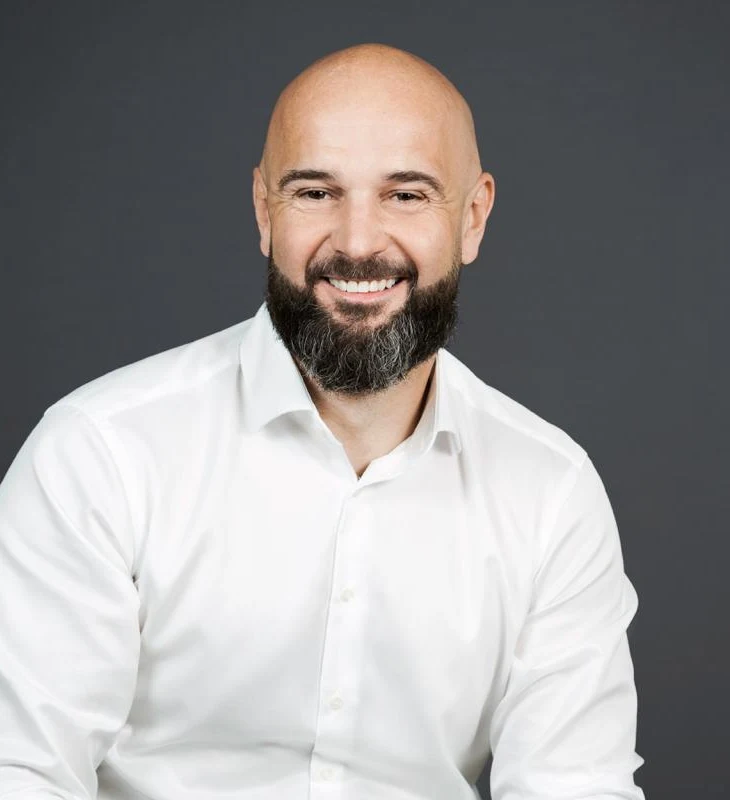
co-founder
Data analyst and software developer with more than 20 years of experience in database systems, data analytics, data warehousing and reporting. He has long focused on connecting technology with users’ real needs and on the practical uses of artificial intelligence and automation.
At AMBULANCIA.AI he focuses on product strategy, solution architecture and bringing the product to market. His aim is to turn modern AI technology into a tool that genuinely makes doctors’ everyday work simpler.
“Technology makes sense when it saves people time for what matters.”LinkedIn
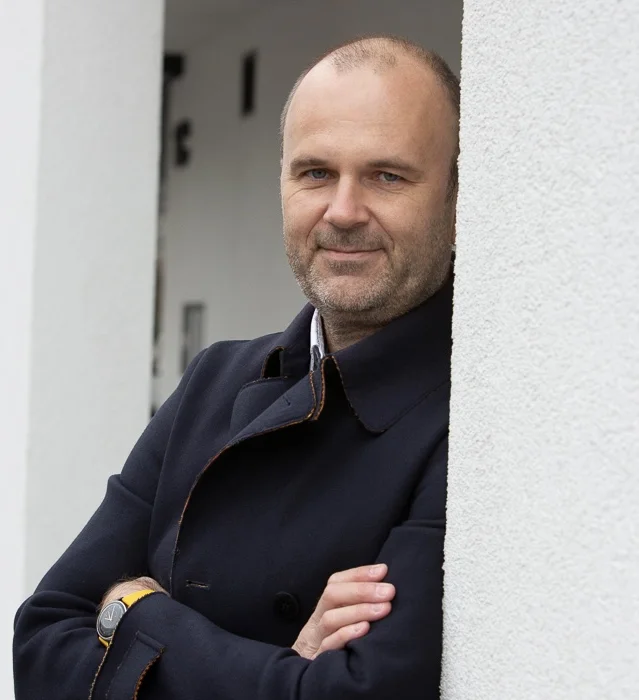
co-founder
The technically minded co-founder of AMBULANCIA.AI and an experienced software developer with several years of management experience in healthcare. He has long worked in BI, data science, machine learning and artificial intelligence, and specializes in small local models on edge devices.
At AMBULANCIA.AI he oversees the product’s technical stack, infrastructure and operations, including training the models for speech transcription and text processing, work with RAG and device management. He is responsible for what happens “under the hood” – from processing the voice input to creating the draft record that the doctor reviews and approves. Together with the team, he connects AI technology with the demands of everyday clinical practice.
“Anyone who is not curious, at least a little, stagnates – and merely survives.”LinkedIn
AMBULANCIA.AI grew out of a question: where can artificial intelligence genuinely help doctors in their everyday work? We develop it in Bratislava within eSense, s.r.o., a company that has been building software solutions since 2006.
The clinical note is the project’s first practical solution. Alongside it, we are exploring other uses of the same technological foundation – for example in working with medical records, on ward rounds or in case conferences. For now, these are directions we are working on, not finished products.
development of AMBULANCIA.AI begins
first working prototype of the AI model for general practice
move to a local AI device in the outpatient clinic
first deployment of the prototype in outpatient practice
launch of the Ambassador Program
memorandum of cooperation with the University of Ss. Cyril and Methodius in Trnava on training language models
The clinical note from the conversation is our first step. We want to extend the same principle – local processing of speech and text directly inside the healthcare facility – step by step to other situations in which doctors today lose time searching for information and writing things down.
Key information without a lengthy search.
The aim is to let doctors work with the available records naturally – ask a question in their own words and get a concise answer backed by the relevant records.
Every answer will remain traceable to the original record the information comes from.
A doctor might ask, for example:
The doctor attends to the patient. The record builds up along the way.
The aim is for the assistant to capture the relevant information from the conversation during the ward round and prepare a draft record for that specific patient.
The result should be a ready, structured record that the doctor reviews, edits if needed, and only then confirms.
After the ward round, the following may be ready:
Several expert views. One clear conclusion.
The aim is a tool that helps capture the course of an expert discussion and turn it into a structured draft record. It can arrange the individual opinions by participant or specialty and separate them from the joint conclusion and the agreed next steps.
The result stays under the control of the healthcare professionals: the participants review the record, edit it as needed and then confirm it.
A case conference record may include:
If you have an idea where technology could help you, write to us – we would be glad to hear it.
Pre-order it – the first month is a trial period, and you will see for yourself how much documentation time local AI saves you.